G-Code Lathe Project - The Seal Cap Part 9
Part Nine - Reverse Facing the Second Side
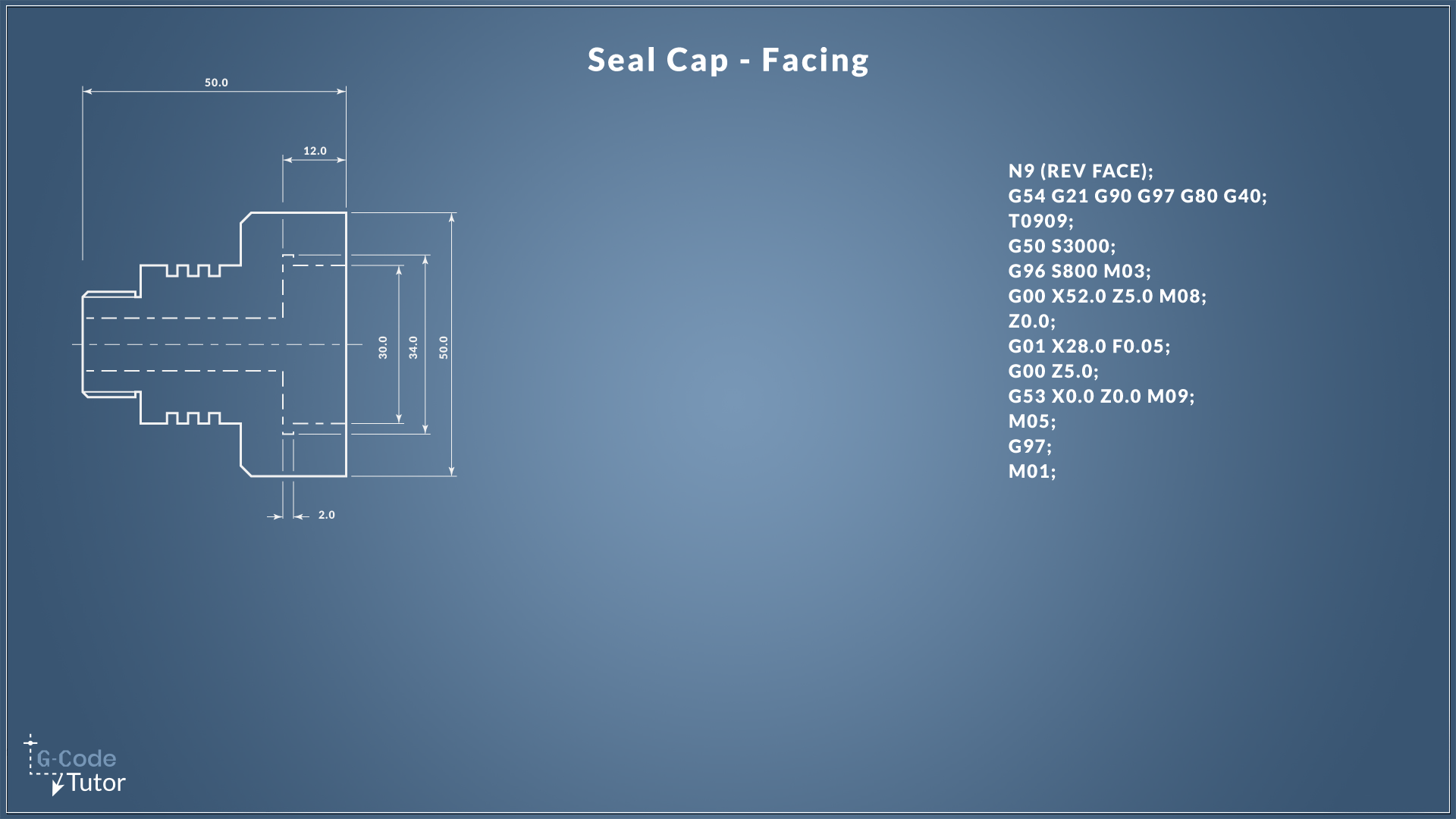
The first side of the Seal Cap is cut off and in the chuck of a second holding. This lesson starts side two: reverse facing the back face to bring the part to its finished length, and, just as importantly, deciding how much of the face actually needs machining at all.
Speed control is set out first: a top RPM limit clamped in before constant surface speed takes over, so the spindle behaves predictably while the tool travels in toward centre and the effective diameter falls. The approach to a fresh, unsupported face is handled with care, since the largest diameter slide move on this side of the program now happens over an open tool position instead of against solid stock. Clearances are set generously and the face is walked into rather than plunged at.
The facing cut runs from the outside diameter inward but stops short of centre, because the operations that follow, the drilling, boring and internal work on this face, will reclaim everything that cross passes over. Spending facing travel to cut air wastes tools and heat, and knowing where to stop a pass is part of writing the program rather than copying one. The lesson closes with the same habit every page in this series finishes on: a clean, safe return that leaves the machine sitting ready for the next tool.
Download the full G-Code handout for this lesson, along with the complete Seal Cap program, here
This free lesson series follows the Seal Cap build from first sketch to finished part and is a taster of what you will learn in the 4-Course G-Code Bundle.
This series is not finished yet, there is still more machining to come soon on the reverse side of the part. The next two operations, the U-drill and the reverse bore, already have their handouts up on the handouts page, and each new episode will be added here as it is released.
Important note
“My courses teach a generic version of FANUC G-Code that may be slightly different than the version used by your machine. By learning the generic g-code that is taught by trade schools (and me) it is easy to adapt to custom versions of the language by reviewing pre-written programs or by consulting the operators manual. There are many variables at play between machines, even two of the same machines may not safely run the same program depending on many factors. Because of this, you should never expect to be able to copy a program into a machine and expect it to work without issues. Even my programs. The example code in my videos is for training purposes only and not intended to be run in a machine.”- Marc
Share this article



Machine Shop Maths Course

For complete Fanuc G-Code Training, click here.
The quickest way to learn CNC Programming